
Bathroom questions
What bathroom exhaust fan do I need?
The fan is one of the cheapest parts of a bathroom and one of the few that decides how long the rest lasts. Here is what California requires, how I size it, and how to tell the old one has stopped working.
Aleksei Kasatkin, owner of ORCA Build Group · Updated October 26, 2026
What California requires
California's green building code (CALGreen) and the building code set the basics for any bathroom with a tub or shower:
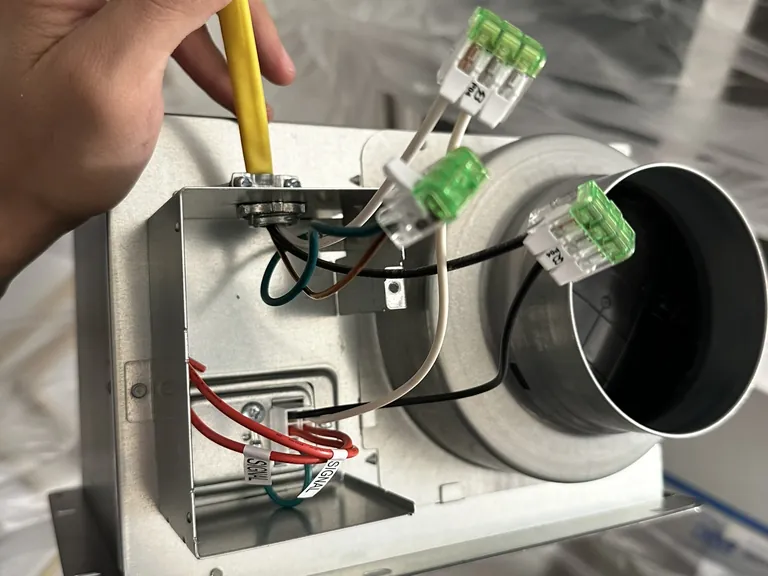
- Ducted to the outdoors, through a wall or the roof. Not into the attic, a soffit vent or a crawl space.
- ENERGY STAR rated.
- Controlled by a humidistat, so it turns on when the air is humid and runs until moisture drops. A humidistat can be built into the fan or into the wall control.
- At least 50 cfm for a fan that runs on demand.
If the fan, the duct or the wiring is new or relocated, that is mechanical and electrical work, and in most Bay Area cities it needs a permit. We confirm permit needs for your address before the contract.
Sizing in cfm
Cfm means cubic feet of air per minute. For a bathroom up to 100 square feet, a common rule of thumb is 1 cfm per square foot of floor, with 50 cfm as the floor. A 5 by 8 foot hall bathroom is 40 square feet, so the 50 cfm minimum covers it. A 9 by 10 foot primary bathroom is 90 square feet, so I would look at 90 cfm or more.
Larger rooms, high ceilings, a separate toilet room or a steam shower need more than the rule of thumb, and sometimes a second fan.
A rated cfm assumes a short, straight duct. Long runs, tight bends and flexible duct crushed in the attic cut real airflow, so we keep the duct short and smooth and end it at a cap with a backdraft damper.
Noise in sones
Fans are rated in sones. The lower the number, the quieter the fan. This matters more than it sounds: people turn off a loud fan or never switch it on, and then the moisture stays. When I choose a fan, I compare sones on the spec sheet next to cfm.
Where to put it
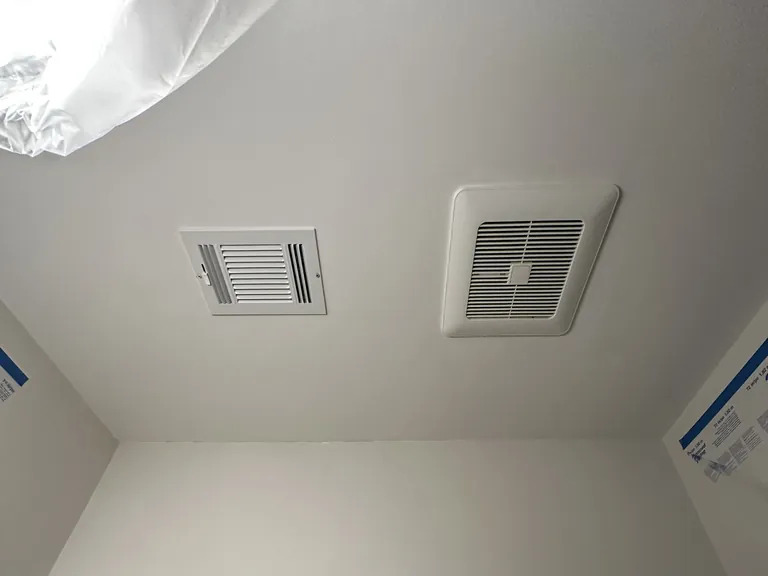
The fan works best close to the shower or tub, where the steam starts, and away from the door, so dry air from the hallway is pulled across the room. A fan installed above the shower must be listed for that location. The door needs a gap at the bottom, or the fan cannot pull air in.
How long to run it
Run the fan during the shower and for a while after, until the mirror and walls are clear. The humidistat handles this on its own, which is the point of the rule. Moisture that sits on the ceiling and in grout lines every day is what leads to mold and peeling paint.
Signs your fan is not working
- The mirror stays fogged long after the shower.
- Paint on the ceiling is peeling or bubbling.
- Mold or dark spots on the ceiling or in the grout.
- A tissue held near the grille is not pulled against it.
- The duct ends in the attic instead of outside.
In any of these cases I check where the duct really goes before replacing the fan. See Signs of water damage in a bathroom for what to look for next.
Can I just replace the fan with a stronger one?
A stronger fan on a long, crushed duct may move less air than its rating. We check the duct first. If it ends in the attic or is too narrow, we fix the duct along with the fan.
Does a window count instead of a fan?
Not in a bathroom with a tub or shower under the current California rules. A window helps, but nobody opens one in January, and the code asks for a fan with a humidistat.
Related questions
- How do I know if there is water damage under my bathroom floor?
- Do I need a permit to remodel my bathroom?
- What goes behind shower tile, and why does it matter?
- All bathroom guides
Codes and permit rules change, and each Bay Area city applies them a little differently. Treat this page as a starting point and confirm the requirements for your address before work begins. We do that as part of every written estimate.
Have a bathroom question this page did not answer?
Send 2–3 photos and tell me what bothers you about the room. I reply with a price range and what I would check first.