
Bathroom questions
Which tile works best in a bathroom?
The tile you like in the showroom is not always the tile that suits a wet floor. Here is how I compare the three main materials, what matters on floors, and how much to order.
Aleksei Kasatkin, owner of ORCA Build Group · Updated October 26, 2026
Porcelain, ceramic or stone
| Material | Where it fits | What to know |
|---|---|---|
| Porcelain | Where it fitsFloors, shower walls, shower floor | What to knowDense, absorbs very little water, no sealing needed |
| Ceramic | Where it fitsWalls, especially outside the shower | What to knowSofter body, easier to cut, many wall tiles are not rated for floors |
| Natural stone | Where it fitsFloors and walls if maintained | What to knowNeeds sealing, marble and limestone scratch and etch |
Porcelain and ceramic are both fired clay, but porcelain is fired harder and denser. That is why it suits a shower floor that is wet every day. Ceramic wall tile is a good choice for a wainscot or a backsplash, and it often comes in colors and glazes porcelain does not.
Natural stone
Marble, travertine and limestone are softer than porcelain. Acidic cleaners, some shampoos and hard-water treatments can leave dull spots, called etching, that do not wipe off. Stone also needs a penetrating sealer before grout and again on the schedule the sealer maker gives. I put stone in bathrooms when the client wants it and knows the upkeep, and I usually suggest it for a vanity wall or floor rather than the shower floor.
Slip resistance on floors
A bathroom floor gets walked on wet, so the tile's slip rating matters more than its look. The ANSI A137.1 standard, using the ANSI A326.3 test, calls for a DCOF of at least 0.42 for tile on level interior floors that will be walked on when wet. Check the spec sheet before you fall in love with a polished finish.
In the shower pan, smaller tiles help. A 2 by 2 inch mosaic has many more grout lines per square foot than a large tile, and each line gives your foot a little grip. Small tiles also follow the slope to the drain more easily.
Large-format tile needs flat surfaces
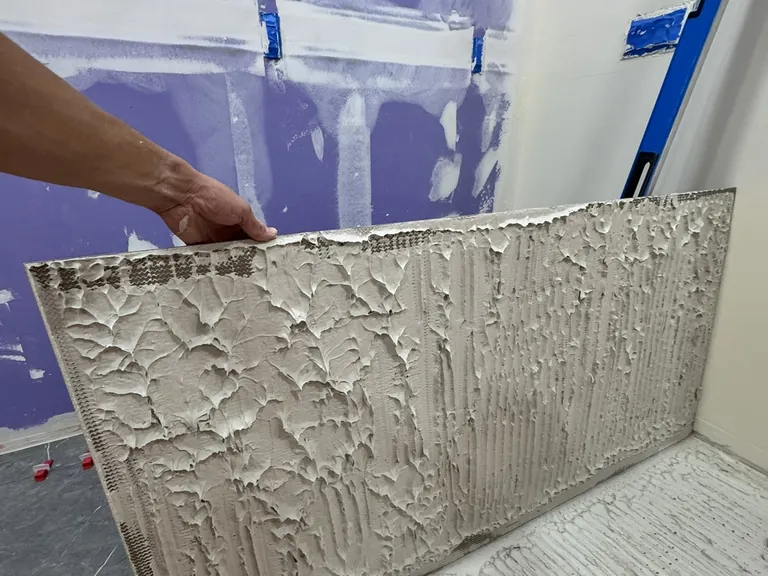
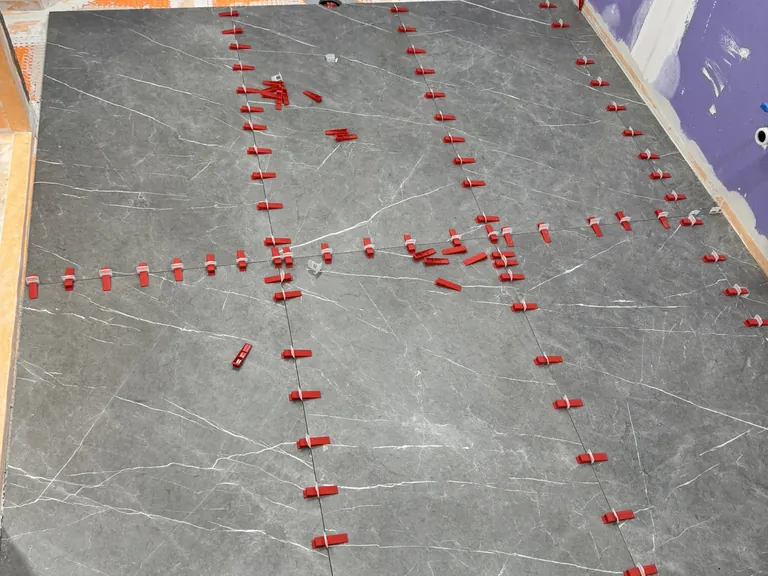
Tiles of 24 inches and longer look clean, with fewer grout lines, but they show every dip in the wall or floor. If the surface is not flat, one edge sits higher than the next, which is called lippage. Before large tile goes up, we flatten the walls and floor, and that prep time is part of why large format costs more to install. In old houses with wavy walls, I sometimes recommend a smaller tile on the walls and large tile on the floor only.
How much to order
- About 10% extra for a straight layout, to cover cuts and breakage.
- More for patterns such as herringbone or diagonal, where more tiles are cut.
- Order it all at once, from one production batch, so the color matches.
- Keep 1 or 2 spare boxes after the job. If a tile cracks in five years, the same color may not be made anymore.
Our estimate lists tile as a named allowance, so you know what the price assumes. If you choose something outside the allowance, I tell you the difference before ordering. You can see options on our bathroom page.
Can I use the same tile on the floor and in the shower?
Yes, if it is porcelain and meets the slip guidance for wet floors. Many clients use one tile for the floor and walls and a matching mosaic for the shower pan. That keeps the room calm and simplifies ordering.
Is more expensive tile always better?
No. Price often follows design and brand, not performance. A plain porcelain tile that meets the slip guidance will outlast a costly polished stone on a wet floor. I compare spec sheets with you before anything is ordered.
Related questions
- Cement, urethane or epoxy grout: which should I choose?
- What goes behind shower tile, and why does it matter?
- Should I buy the fixtures myself or let the contractor supply them?
- All bathroom guides
Codes and permit rules change, and each Bay Area city applies them a little differently. Treat this page as a starting point and confirm the requirements for your address before work begins. We do that as part of every written estimate.
Have a bathroom question this page did not answer?
Send 2–3 photos and tell me what bothers you about the room. I reply with a price range and what I would check first.