
Bathroom questions
Pressure-balance or thermostatic shower valve: which do I need?
The valve sits inside the wall, so most people never think about it until the tile is up. Here is what each type does and which decisions have to be made before that point.
Aleksei Kasatkin, owner of ORCA Build Group · Updated October 26, 2026
What the code requires
In California every shower valve must be either pressure-balancing or thermostatic mixing. Both exist for the same reason: to keep the water from turning hot enough to scald when someone flushes a toilet or starts the dishwasher. An old two-handle valve without that protection does not stay in a remodeled shower.
How the two types differ
| Feature | Pressure-balance | Thermostatic |
|---|---|---|
| What it reacts to | Pressure-balanceA drop in hot or cold pressure | ThermostaticThe temperature of the mixed water |
| Controls | Pressure-balanceUsually one handle for on and temperature | ThermostaticTemperature and volume set separately |
| Several outlets at once | Pressure-balanceLimited | ThermostaticDesigned for it |
| Cost | Pressure-balanceLower | ThermostaticHigher, for the valve and the trim |
A pressure-balance valve is a single handle in most homes. You turn it on and the farther you turn, the warmer it gets. It does not let you run a weaker stream at the same temperature. For a hall bathroom with one showerhead, this is what I usually recommend.
A thermostatic valve holds the temperature you set and lets you change the flow without touching it. It pairs with volume controls or a diverter, so a fixed head, a handheld or body sprays can be controlled separately or together. It costs more and takes more room in the wall, so it belongs in the shower where you will use those features.
Buy the valve and the trim together
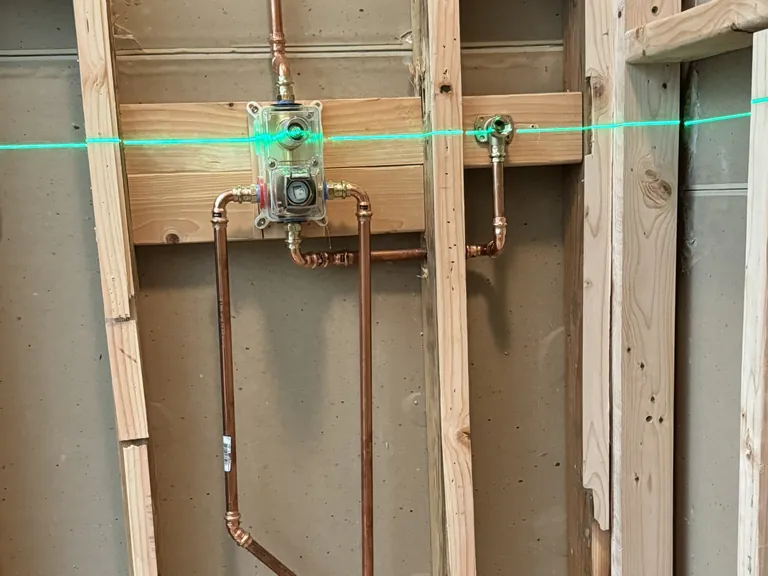
The valve body inside the wall and the handle and plate you see (the trim) come from the same manufacturer and usually from the same product line. A trim from another brand does not fit, and some brands change valve designs over the years. When you pick a shower set, pick the valve that goes with it and have both on site before rough plumbing.
Height and placement
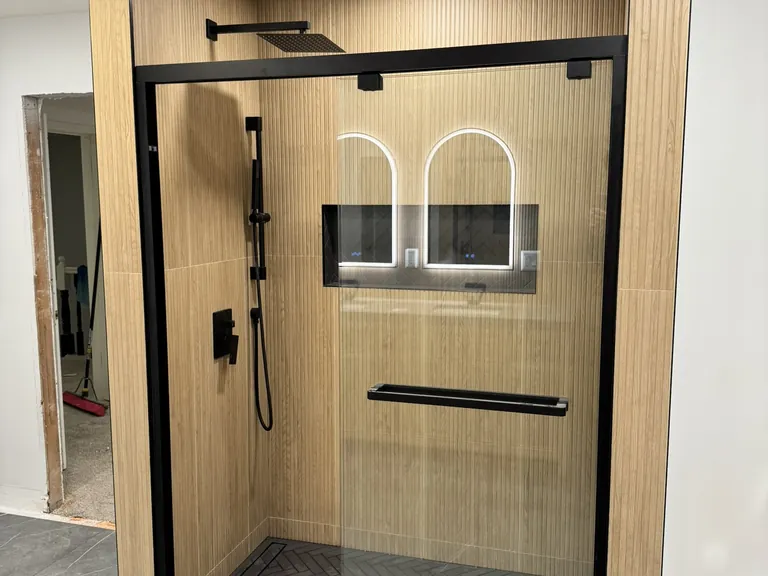
- Valve height. Typically about 38 to 48 inches from the floor. I agree on it with the people who use the shower, not by a number alone.
- Reach from outside the spray. In a walk-in shower I like the handle near the entry, so you can turn the water on and wait for it to warm up without standing under it.
- Showerhead. California limits showerheads to 1.8 gallons per minute. A taller household may want the arm higher than standard.
- Handheld on a slide bar. Useful for rinsing the shower, washing a child or a dog, and for sitting on a bench. The bar needs solid blocking behind the tile.
Why this is decided before walls close
The valve, the diverter and every pipe to each outlet are installed during rough plumbing, before cement board and waterproofing. Changing your mind after tile means cutting into a finished wall. That is why our estimate lists the valve and trim as named allowances and why I ask for the final choice before demolition.
If you are not sure what you need, tell me how you use the shower: who uses it, whether you sit, whether you want a handheld. That usually settles it in a few minutes. You can see how we plan these steps on the process page.
Is a thermostatic valve worth it for a single showerhead?
Usually not. A pressure-balance valve already meets the anti-scald requirement and works well with one head. The extra cost makes sense when you want separate volume control or more than one outlet.
Can I keep my existing valve and only change the handle?
Sometimes, if the valve is pressure-balancing or thermostatic, in good condition and a matching trim is still made. If it is an older valve without anti-scald protection, it gets replaced during the remodel.
Related questions
- Should I replace my tub with a walk-in shower?
- Should I buy the fixtures myself or let the contractor supply them?
- How do I make a bathroom safe for later years without it looking like a hospital?
- All bathroom guides
Codes and permit rules change, and each Bay Area city applies them a little differently. Treat this page as a starting point and confirm the requirements for your address before work begins. We do that as part of every written estimate.
Have a bathroom question this page did not answer?
Send 2–3 photos and tell me what bothers you about the room. I reply with a price range and what I would check first.